qsort in C: comparison function without overflow
How to write a qsort comparison function in C: cast void pointers, return the sign, avoid a - b, and sort from INT_MIN to INT_MAX.
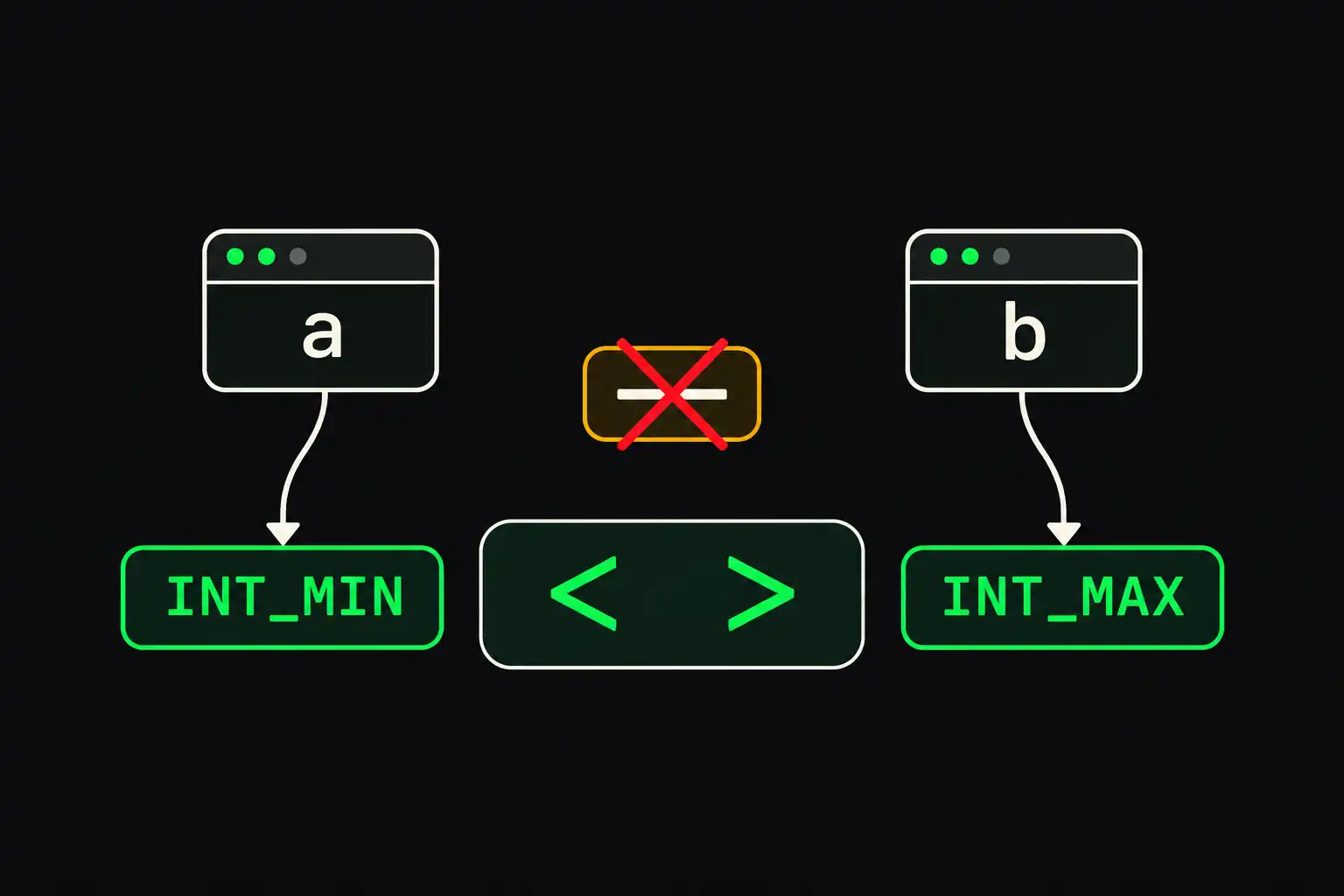
You pass qsort an array of int, then it asks for a function with two const void * parameters. The cast feels like ceremony, many tutorials answer with return a - b, and the sort seems fine. Until the array contains INT_MIN and INT_MAX.
In short
A qsort comparison function receives the addresses of two elements. For int, cast each address to const int *, read the value, then return a negative number, zero, or a positive number according to the order. Write return (left > right) - (left < right);, not left - right: that subtraction can overflow for two valid integers, which is undefined behavior in C.
What does a qsort comparator actually receive?
qsort does not know the element type. It knows the array address, element count, element size, and a function to call. Its two function arguments are therefore addresses, not the two int values themselves.
#include <stdio.h>#include <stdlib.h>
static int compare_ints(const void *first, const void *second){    int left = *(const int *)first;    int right = *(const int *)second;
    return (left > right) - (left < right);}
int main(void){    int values[] = {7, -4, 0, 42};    size_t count = sizeof values / sizeof values[0];
qsort(values, count, sizeof values[0], compare_ints); for (size_t i = 0; i < count; i++) printf("%d%c", values[i], i + 1 == count ? '\\n' : ' '); return 0;}$ gcc -Wall -Wextra -Werror -g sort.c -o sort$ ./sort-4 0 7 42The cast tells the compiler which type is at that address. The * then reads that int. After that, qsort only uses the sign of the result: negative when left goes before right, positive the other way, zero when they are equal.
- qsorttwo element addresses
- const void *first and second
- intleft and right
- sign-1, 0, or 1
The cast changes with the array type. For struct score, use const struct score *. For an array of strings, the elements are char *, so the arguments are pointers to those pointers: const char *const *.
Why can return left - right break a sort?
The difference between two int values can be outside the int range. INT_MIN - INT_MAX is not representable. The C standard makes the behavior undefined, so no comparison result is guaranteed.
#include <limits.h>#include <stdio.h>
static int compare_by_subtraction(const void *first, const void *second){    int left = *(const int *)first;    int right = *(const int *)second;
    return left - right;}
int main(void){    int low = INT_MIN;    int high = INT_MAX;
printf("%d\\n", compare_by_subtraction(&low, &high)); return 0;}$ gcc -Wall -Wextra -Werror -fsanitize=undefined -g subtraction.c -o subtraction$ ./subtractionsubtraction.c:9:17: runtime error: signed integer overflow: -2147483648 - 2147483647 cannot be represented in type 'int'1The final 1 is a value observed in this environment, not a reliable ordering. The sanitizer found the error before the sort could be trusted.
The comparison version never subtracts the data. Each comparison yields 0 or 1, so their difference is necessarily in {-1, 0, 1}.
#include <limits.h>#include <stdio.h>#include <stdlib.h>
static int compare_ints(const void *first, const void *second){    int left = *(const int *)first;    int right = *(const int *)second;
    return (left > right) - (left < right);}
int main(void){    int values[] = {INT_MAX, 0, INT_MIN};
qsort(values, 3, sizeof values[0], compare_ints); printf("%d %d %d\\n", values[0], values[1], values[2]); return 0;}$ gcc -Wall -Wextra -Werror -fsanitize=undefined -g limits.c -o limits$ ./limits-2147483648 0 2147483647
qsort
The qsort exercise has you rebuild the mechanism with void *, an element size, and a comparator. Its tests use char, long, and structures, so an implementation that assumes every element is an int fails quickly.
How do you sort structures and strings?
Compare a structure by the field that decides its order. Use the same comparison shape for an int field, then add a tie-breaker when the order must stay predictable for equal scores.
#include <stdio.h>#include <stdlib.h>#include <string.h>
struct score {    const char *name;    int points;};
static int compare_scores(const void *first, const void *second){    const struct score *left = first;    const struct score *right = second;    int order = (left->points > right->points) - (left->points < right->points);
    if (order != 0)        return order;    return strcmp(left->name, right->name);}
int main(void){    struct score values[] = {{"Lina", 12}, {"Adam", 12}, {"Maya", 7}};    size_t count = sizeof values / sizeof values[0];
qsort(values, count, sizeof values[0], compare_scores); for (size_t i = 0; i < count; i++) printf("%s: %d\\n", values[i].name, values[i].points); return 0;}$ gcc -Wall -Wextra -Werror -g scores.c -o scores$ ./scoresMaya: 7Adam: 12Lina: 12To sort strings, the array holds pointers to char. The comparator therefore receives the address of an element that is already a pointer: dereference it once to reach the char *, then call strcmp.
#include <stdio.h>#include <stdlib.h>#include <string.h>
static int compare_words(const void *first, const void *second){    const char *const *left = first;    const char *const *right = second;
    return strcmp(*left, *right);}
int main(void){    const char *words[] = {"zebra", "ant", "mango"};    size_t count = sizeof words / sizeof words[0];
qsort(words, count, sizeof words[0], compare_words); for (size_t i = 0; i < count; i++) puts(words[i]); return 0;}$ gcc -Wall -Wextra -Werror -g words.c -o words$ ./wordsantmangozebraqsort does not guarantee the relative order of two elements your comparator considers equal. If that order matters, add a tie-breaker, such as the name in the example, or store the original index with each element.
To put the types back in place, read Array vs pointer in C. For function-pointer mechanics, Pointers in C explains their declaration. Signed overflow belongs to the same family as the examples in undefined behavior.
Frequently asked questions
Must a comparator return exactly -1, 0, or 1?
No. qsort only requires a negative, zero, or positive result. The two-comparison formula returns those three values and avoids overflow.
Why does return left - right seem to work?
Values that are close enough do not overflow the subtraction. The boundary case is still an invalid C program, even if the processor often produces a plausible-looking number.
Does qsort keep equal elements in their original order?
No. Their final order is unspecified. Add a second comparison when a deterministic order matters.
Should I write sizeof(int) in the qsort call?
sizeof values[0] is better: when the array type changes, its size follows without another edit. The same principle avoids copied sizes in Array vs pointer in C.
Sources